
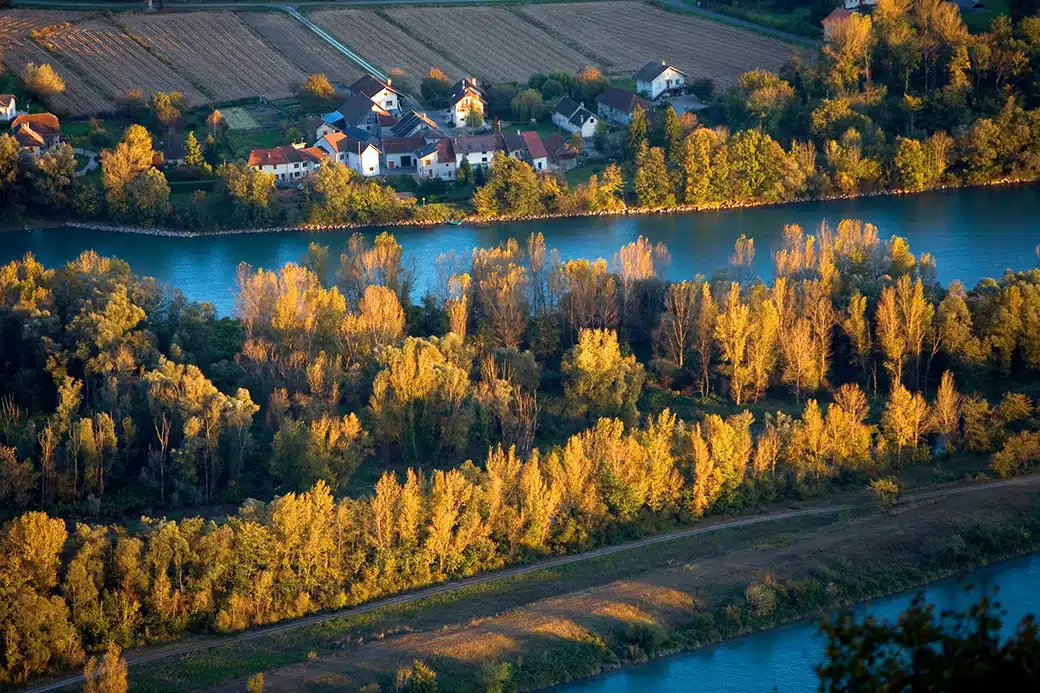
Preserving biodiversity along the Rhone through essential actions
The preservation of ecosystems and biodiversity is a major environmental concern, at a time when a large number of species are threatened with extinction. CNR relies on several levers to ensure its commitment to preserving and restoring the biodiversity in the territories in which it develops its activities.
The dikes of the Rhone: a valuable ecosystem for biodiversity
Maintaining the dikes of the Rhone is a challenge in terms of the environment and safety, both of which come under the responsibility of CNR. By maintaining the vegetation, CNR combines industrial development, safety and environmental preservation along the river.
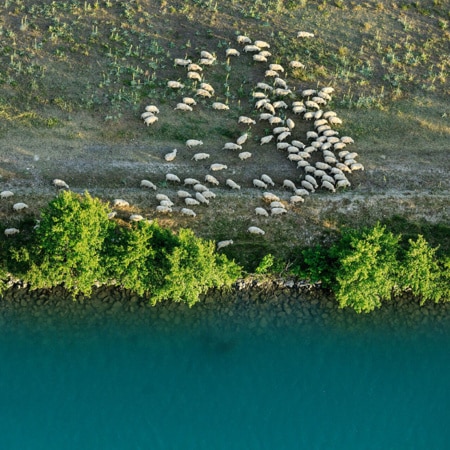
On part of the dikes of the Rhone, this is done in collaboration with local livestock farmers and their herds: grazing is a very good example of preserving biodiversity as it avoids using pesticides and limits the passage of mowers to once every 4 years.
Facilitating the breeding of fish species
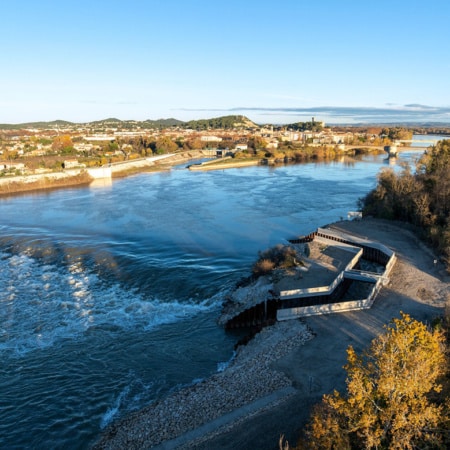
Aware of the impact of its dams on fish species along the Rhone, CNR builds and regularly maintains a large number of fish passes to ensure continuity for fish between different sections of the river.
They allow different migrating species to return to their spawning grounds, a flow vital to the development of biodiversity on the Rhone.
Favouring pollinators to preserve the flora
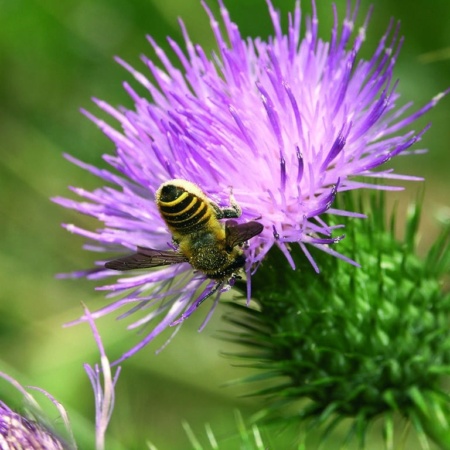
Greatly affected by human activity and climate change, pollinating insects play an essential role in the reproduction of wild plants and thus in the preservation of biodiversity.
CNR develops concrete actions to increase the number of shelters and food sources for these species threatened with extinction through its involvement in the National Action Plan and alongside specialised organisations.

Taking migrating birds into account
CNR and its subsidiary Vensolair carry out an environmental study for each of the latter’s wind farm projects that includes the study of the paths taken by migrating bird paths.
If a risk is apparent, the windfarm project is displaced and may even be cancelled so as not to disturb the natural migration paths of the species concerned.
Science in the service of the environment
Environmental DNA
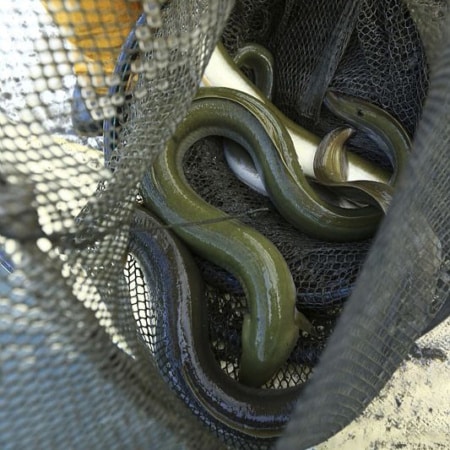
Since 2013, CNR uses and participates in the development of biodiversity inventory techniques using environmental DNA (eDNA). Thus, the Rhone is one of the first rivers in the world to benefit from this technique with high potential to monitor its biodiversity.
A founding member of the international alliance Vigilife, CNR works on the project “Rhône Fleuve Sentinelle” aimed at deploying a network to use eDNA to fully monitor the Rhone from its source to its delta.
The first phase of this project will consist in launching a demonstrator at 15 stations distributed between Switzerland and France in order to organise a more ambitious project in the river basin, by developing the scientific, technical, institutional and financial partnerships required for its long-term deployment.
The combat against plastic pollution
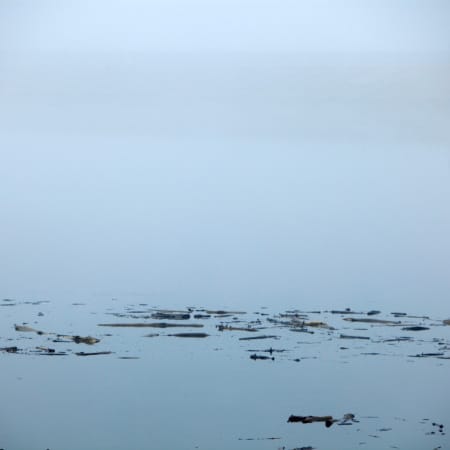
As developer of the Rhone, CNR is not responsible for the plastic pollution in the river but it is involved, alongside the Rhone-Mediterranean-Corsica Water Agency, the Fondation Tara Océan, Plastic@Sea and research laboratories in increasing knowledge about this problem.
Restoring the oxbows of the Rhone: a commitment since 1998
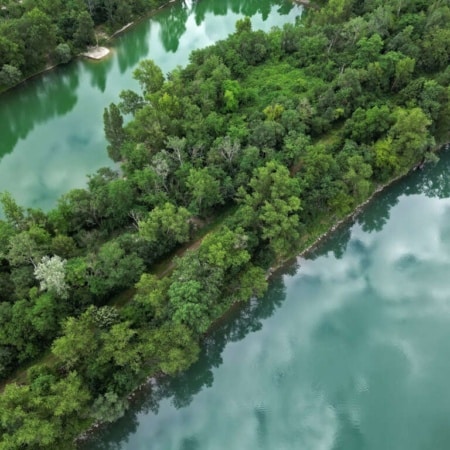
The oxbows were adversely affected by the industrialisation of the Rhone and the creation of a canal for river transport. In 1998, CNR and local actors started a huge ecological restoration programme.
Renewed in 2006 by the Rhone Plan, the aim of the programme is to restore more natural functioning to the river, especially regarding sediment transport, favouring biodiversity and increasing the positive effects of floods in the oxbows.
Thus, CNR’s mission is to anticipate and prepare the river for the impacts of global warming.
Sediment management: responsibility with considerable environmental stakes
In close collaboration with the Services Industriels de Genève (SIG) and the Société des Forces Motrices de Chancy-Pougny (SFMCP), CNR’s teams monitor throughout the year the levels of sediments (gravel, silt, sand, etc.) that accumulate at the foot of the dams.
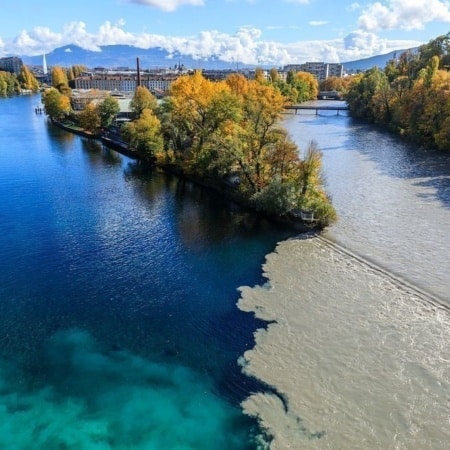
In this framework, a sediment management operation is carried out every 3 or 4 years. The aim of this operation consists in getting up to 1.5 million m3 of sediments to transit gradually to the sea in order to avoid the risk of flooding in certain districts of Geneva.
This operation entails considerable environmental challenges: sediments are essential materials for maintaining the sedimentary balance of the river. The possible impact of the operation on the fauna and flora as well as on the quality of the water must also be measured and controlled.
Each operation lasts on average about ten days and requires nearly 400 CNR employees to limit this impact and ensure efficient sediment management.