
Ensuring hydraulic security on the Rhone
CNR operates 19 hydropower plants whose security relies on constant monitoring, strict procedures and close dialogue with the relevant government departments. The protection of the neighbouring population, river users and the teams working on the structures demands permanent vigilance. This security relies on identifying the risks, implementing preventive measures and clear information.
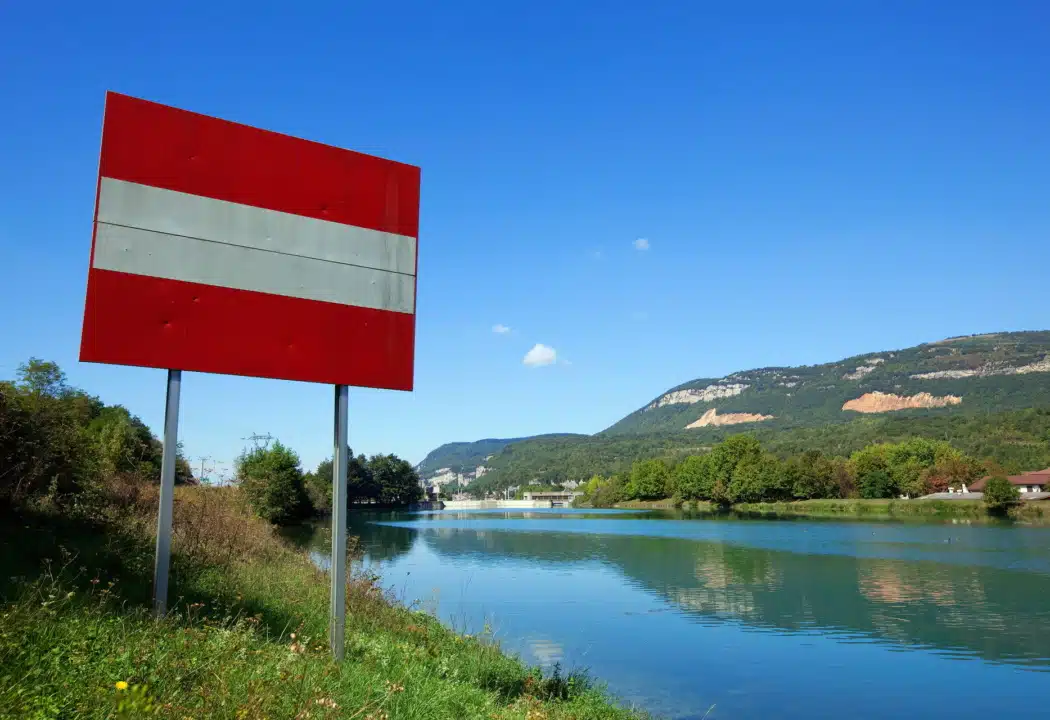
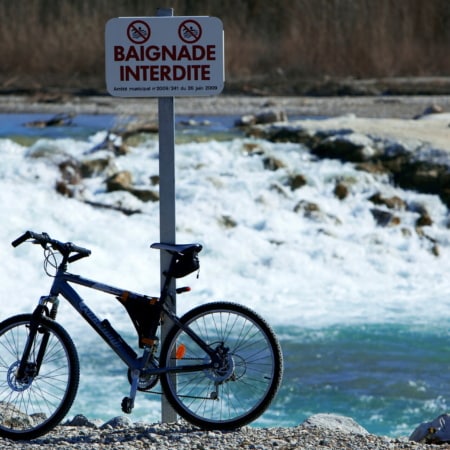
Hydraulic security covers all the measures intended to protect people and the risks linked to the presence and operation of: dams, hydropower plants, dikes and weirs. In collaboration with the DREAL, CNR has identified the areas where access to the public is forbidden: the slopes of river banks, islets, gravel beds and the river bed immediately upstream and downstream of the installations. This prohibition is enforced by prefectural rulings. However, access to dikes remains authorised.
On a daily basis, CNR strengthens security through information campaigns, dam opening procedures and prevention measures aimed at walkers, anglers and those practising nautical activities.
Dam openings
The dams can be opened even during fair weather, resulting in increased discharges in the bypassed sections of the Rhone. Persons present in the beds of the bypassed sections of the river must quickly seek safety on the banks of the Rhone.
Warning procedures are set in action to alert persons in the vicinity that the dams are to be opened:
- Each initial opening of a dam begins by a fractioned opening of the gates – the “warning release” – leading to the controlled raising of the water level.
- This controlled raising of the water level warns the people present on the beds of the bypassed sections of the Rhone (anglers, strollers, etc.) that the dam is being opened; this signals that they must quickly return to the banks for their own safety.
- These warning procedures complete the permanent information panels on the river banks and the prevention actions in the field carried out in the framework of the “Caution on the banks of the Rhone” campaign.
Informing the users of the Rhone and making them aware
With more than 500 information panels installed from Génissiat to the Mediterranean Sea, safety around the installations also depends on constant pedagogy.
Every summer, prevention agents visit the banks of the Rhone to inform the neighbouring populations and tourists.
The prevention campaign on the Rhône river simply reminds people of the safety rules to follow along the riverbank:
- Comply with the signalisation,
- Do not go into the forbidden areas,
- Beware and monitor the water level: return quickly to the river bank if the level rises.

Prevention Rhône Duration :1:57 min
Even during fine weather, the level of the Rhone can rise quickly and cover the gravel beds, islets and areas reached easily. The information panels highlight these risks and refer to multilingual contents via QR codes.
In the summer, a dedicated team sets out to meet anglers, cyclists, bathers and families to inform them of vital instructions. Louloute the otter, a mascot aimed at the general public, disseminates messages through different media: posters, radio, the press, social networks.
Online pedagogical content also facilitates understanding of the mechanisms underlying the rises in water level and the rules of caution.
Dredging: maintaining the river and guaranteeing navigation
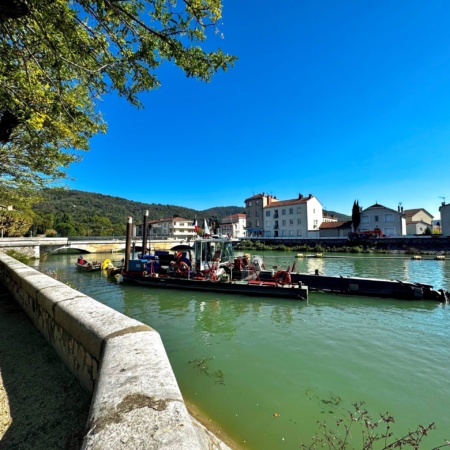
As concessionary of the Rhone, every year, CNR maintains the bed of the Rhone to ensure the depth of the navigable channel and the passage of flood flows, and preserve the operation of the structures.
Dredging consists in displacing sediments that accumulate in certain areas.
These operations are intended to limit the impact on the natural environment and species and obey strict regulations.
Every year, about 40 dredging operations are carried out following administrative authorisations, in conformity with the law on water and wetlands (LEMA). Regarding sensitive sites, operations are planned during the most favourable periods so as not to coincide with reproduction or migration periods.
Before the works are carried out, an incident sheet is sent to the administration which validates the measures taken to control environmental impacts. Once approved, these sheets are made public to ensure the transparency of CNR’s operations on the river.
A safety policy organised around the target of zero serious accident
CNR has bolstered its safety governance with the creation of a Safety and Security Direction endowed with an ambitious roadmap. Our approach is structured by continuous risk analysis, visits in the field and feedback from experience. The last two years have confirmed this approach: proactive prevention measures, risk evaluation tools and mobilised teams enable the lasting reduction of accidents. Both employees and outsourced personnel are fully integrated in this approach.
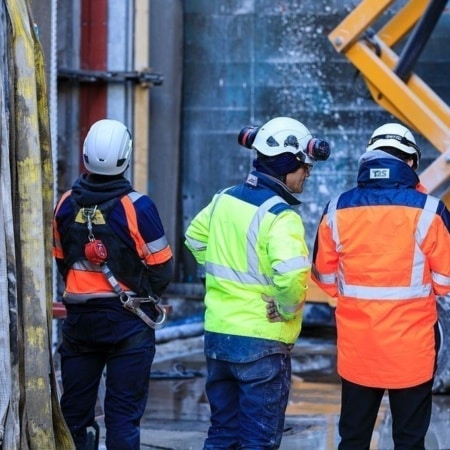
CNR relies on a solid safety culture, shared internally and on construction sites.
The construction sites, technical interventions and industrial operations are subject to rigorous planning: risk analysis, coordination, StopORisk briefing, fire monitoring, the management of high potential serious incidents (HiPo). This organisation enables foreseeing sensitive situations, identifying weak signals and adapting immediate preventive actions.
Building a shared safety culture
CNR’s safety culture is based on a simple principle: everyone, whether employee or service provider, must implement the essential rules of prevention. This culture is learned through training, assistance in the field and sharing experience. New arrivals are given systematic training, managers are assisted, and external teams participate in joint tours to ensure common understanding of safety requirements.
Improving the skills of teams is a central lever. The members of COMEX, the managers, the representatives of the personnel and the safety organisation have been trained in this new approach, and to use the different tools. These measures are strengthened by individual assistance through coaching sessions in the field to ensure these tools are used efficiently and consolidate prevention reflexes.
By reinforcing presence and vigilance in all the operations on a daily basis, and by encouraging dialogue, these actions favour a proactive prevention culture and contribute to building sustainable performance regarding safety.