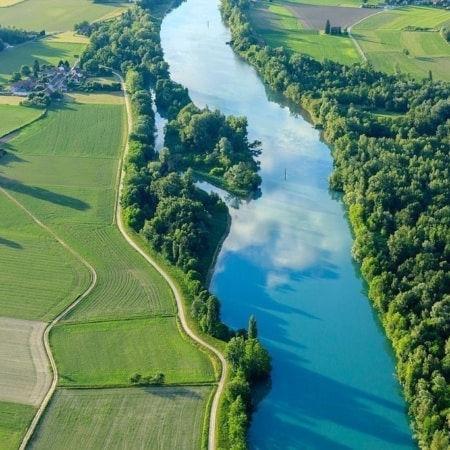
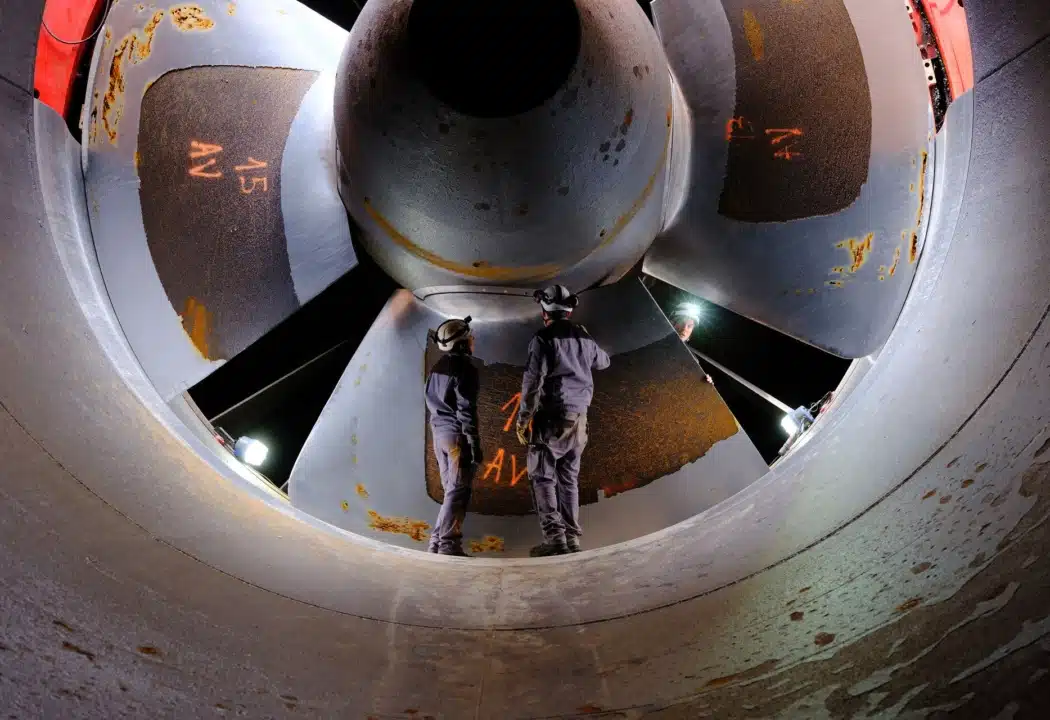
The programme of works up to 2041
This programme pursues the goal of optimising the infrastructures of the Rhone in a context of increasing variability of discharges and increasing energy needs. It carries on from the master plan adopted in 2003, now updated up to 2041, which encompasses the concessionary’s commitments for the remaining duration of the concession.
The programme of works completes this framework by setting out operational and contractual target dates. It requires an investment estimated at €500 M.
The works will concern four major sectors:
- Increasing the Rhone’s energy capacities (modernisation of plants, new studies on flexibility and storage);
- Equipping several dams with small hydroelectric plants and fish passes;
- Exploiting small heads through the installation of microturbines;
- Modernising navigation structures, in particular at Bollène and Châteauneuf-du-Rhône.
They plan in particular to increase the production of the Montelimar hydropower plant, and the construction of 6 small hydropower plants and fish passes on several dams, as well as the installation of microturbines on the weirs of the Rhone to exploit small heads. It also includes the doubling of the downstream gates of the locks of Bollène and Châteauneuf-du-Rhône to increase the reliability of navigation.
In parallel, several studies will be carried out on the flexibility of the Rhone’s hydroelectricity network: new production capacities at Génissiat, adjustment of the forebay’s operating level, the development of small pumped energy transfer stations linked to the river, and the deployment of hybrid batteries in existing plants.
The entire programme of works is intended to increase renewable hydroelectricity production, support modal transfer and strengthen the resilience of the Rhone-Saone corridor.
Developing new hydroelectricity capacities
Several energy projects are under study to bolster the installed capacity and flexibility of the Rhone. They involve in particular the site of Génissiat, where CNR will study the development of new hydroelectricity capacities and raise the operating height of the forebay to optimise and modulation.
Studies will also focus on the construction of small pumped energy transfer stations connected to the river, and on the integration of hybrid batteries in the existing hydroelectricity facilities to improve the response to the electricity system during peak demands.
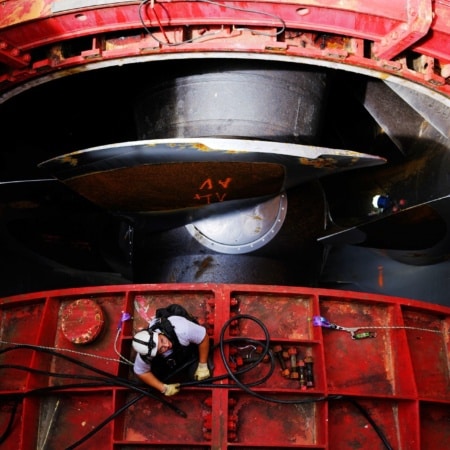
Increasing the production of the hydropower plant of Montélimar will require the modernisation of three turbine units and adjusting the operating height.
The works, estimated at about €54 M, will permit a gain of around 100 GWh a year, that is to say the consumption of 15,000 people.
This investment shows the priority given to modernising existing structures.
Optimising existing structures
A large part of the programme involves the equipment of existing dams to increase renewable energy production while preserving the river’s biodiversity.
CNR plans the construction of six small hydropower plants (SHP) and six fish passes to increase output and restore connections for fish between sections of river.
These works represent a gain in production estimated at +228 GWh a year.
- These items of equipment will allow harnessing currently unexploited discharges, especially on the Old Rhone (bypassed sections of the river).
- Microturbines, with capacities ranging from 500 to 1,000 kW, will provide targeted gains without modifying the hydraulic balance.
- The developments carried out at Rochemaure and Le Pouzin serve as references for linking energy production with ecological restoration.
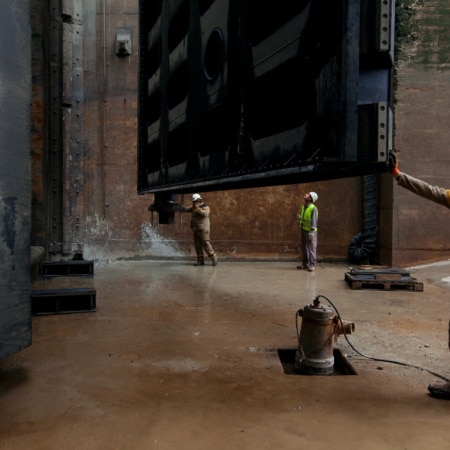
- The programme also includes the doubling of the downstream gates of the locks of Bollène and Châteauneuf-du-Rhône.
- These structures, among the oldest on the Rhone, were equipped with only one downstream gate, limiting their availability in the case of damage.
- The new installations will durably strengthen the reliability of the navigation service and river transport.

Localisation and challenges
Production
Targeted operations from the Upper Rhone to the delta to increase renewable hydroelectricity production.
Navigation
Works on locks and river infrastructures to preserve the logistic continuity of the Rhone-Saone corridor.
Écologie
Small hydropower plants, fish passes and continuity of fish populations: structural actions to favour the river’s ecological functions.
An investment plan in the service of the territories
In addition to the works programme, an investment plan is deployed in the Rhone Valley to support renewable energy production, carbon-free logistics and sustainable water resource management.
This plan budgeted at close to €300 M has one objective: accelerating concrete projects that can be carried out from now to 2041. It relies on work carried out between the government, CNR and territorial actors, resulting in the reallocation of credits previously allocated to the Rhonergia project.
This devotes a large amount of the investments to increasing electric flexibility: studies of new hydroelectricity capacities, hybrid batteries for hydropower plants, optimisation of forebay levels and the development of small STEPs.
It also supports the development of modal transfer between rail and river, in particular via a logistic interconnection project at Loire-sur-Rhône.
Lastly, an agricultural and territorial section assists the modernisation of the irrigation network, sustainable water management and the exploitation of land earmarked for industrial and logistic use.
The projects not chosen will be re-examined in the framework of five year programmes: 5Rhône Plans.