
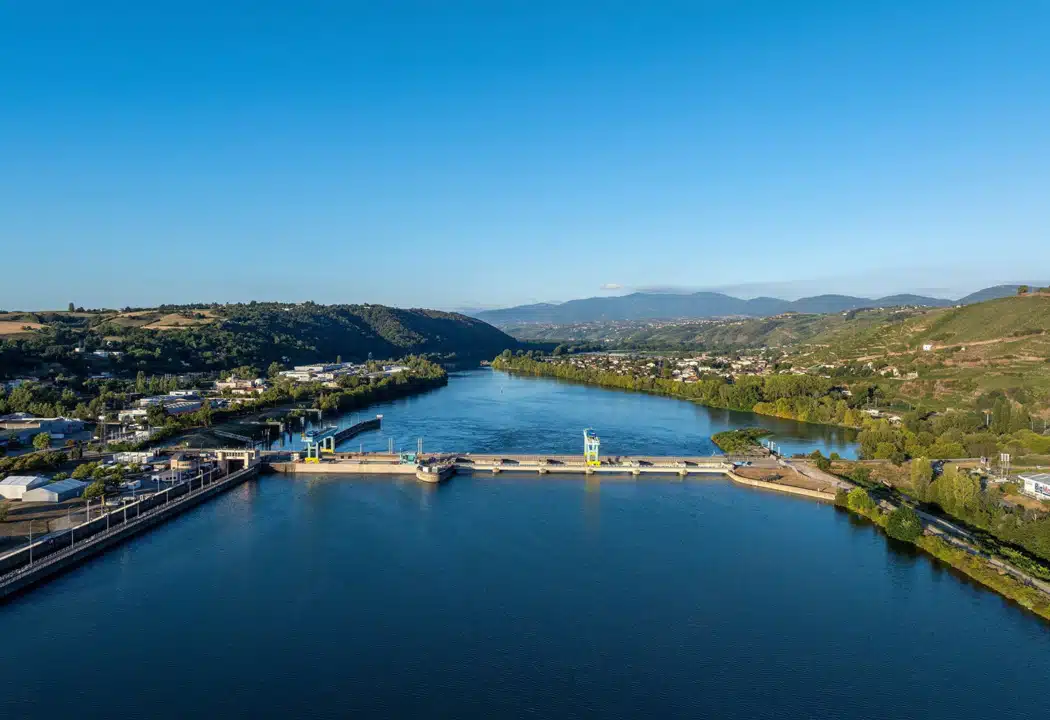
The challenge of sustainable water resource management
CNR acts daily to coordinate. Present throughout the Rhone Valley for 90 years, CNR has proven experience in the multi-use management of this resource: hydroelectricity production, irrigation, river transport, and the preservation of natural habitats.
It acts on many different scales owing to the size of its concession: from local to global.
Faithful to its DNA, it is committed alongside the stakeholders of the Rhone to ensure the shared management of the water to guarantee the river’s resilience in the service of the territories and future generations.
CNR ensures continuous supervision and reinforced readiness to cope with hydrological fluctuations.
Guaranteeing efficient hydroelectricity production
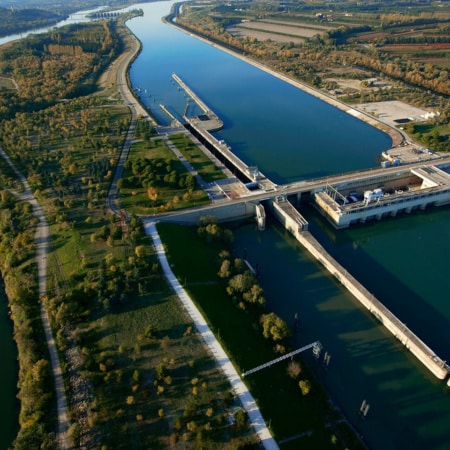
CNR operates 46 hydroelectric facilities (19 large plants and small and micro plants) along the Rhone, enabling it to produce renewable “run of the river” energy: no reservoirs are used, so production depends on the discharge of the river.
Developing responsible river navigation
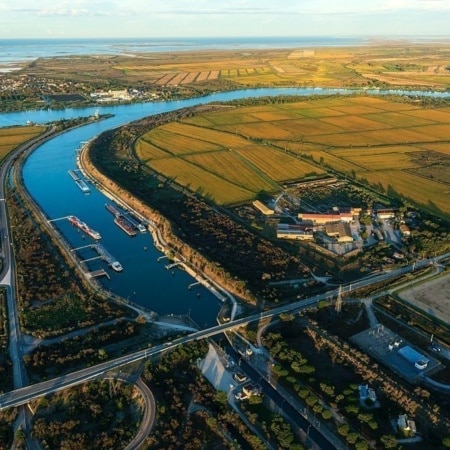
River navigation is one of CNR’s historic missions, as it operates 14 wide-gauge locks and manages 17 industrial and port sites along 300 km of navigable waterway. The Mediterranean-Rhone-Saone corridor represents an opportunity for the economic development and transition of the territories, as well as being a sustainable mode of transport for goods and river tourism.
CNR’s vision of river navigation is part of a global approach to the river’s uses: it ensures safe navigation by maintaining its structures in optimum condition.
Supporting local and sustainable agriculture
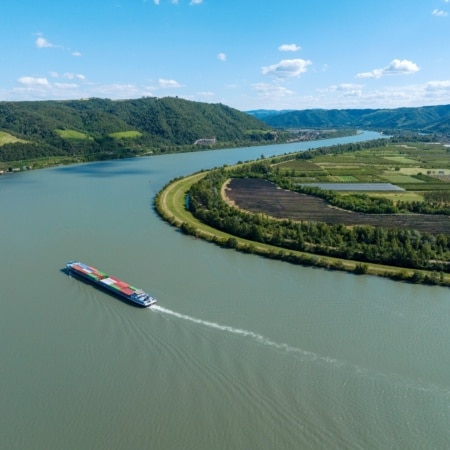
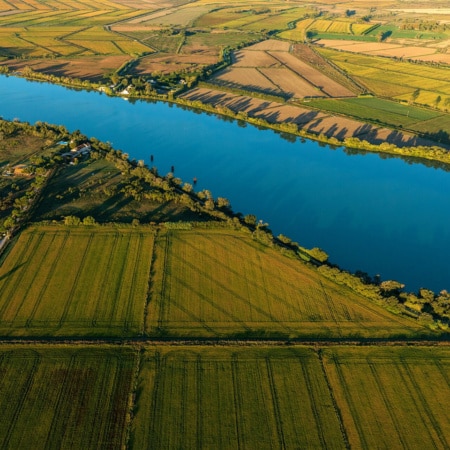
In the framework of its historic mission of providing irrigation to farmland along the Rhone, CNR has allowed the installation on its estate of about 440 agricultural water intakes connected to the river.
Faced with critical climatic challenges that impact the agricultural sector, CNR is committed to assisting the development of an innovative, sustainable and resilient agriculture that uses water resources responsibly.
Close collaboration for a resilient river
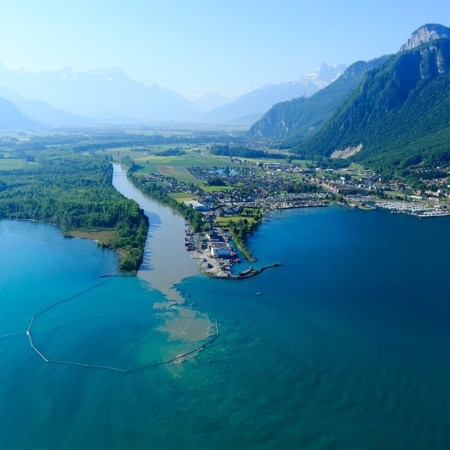
The Rhone is a cross-border river whose source lies in Switzerland; it joins Lake Geneva before flowing into France and, finally, the Mediterranean Sea. Climate change increases pressure on the river, thus augmenting the need for cross-border cooperation.
This historic cooperation was enriched by new ambitions in September 2025 with the signature of two agreements specific to the management of the Rhone and Lake Geneva:
- The first, linked to cooperation regarding cross-border water bodies, provides a joint Franco-Swiss vision of the river to ensure the integrated and sustainable management of water resources. This agreement will also allow identifying current and future challenges regarding water resources, and thus responding to the challenges facing the river in the context of climate change.
- The second, focused on the regulation of the water of Lake Geneva, provides a framework for coordination between the two countries regarding the management of the lake’s levels and its impact on the discharge of the Rhone up to the border, in particular in the case of droughts or flooding.
Ecological restoration: the challenge of coordinating uses
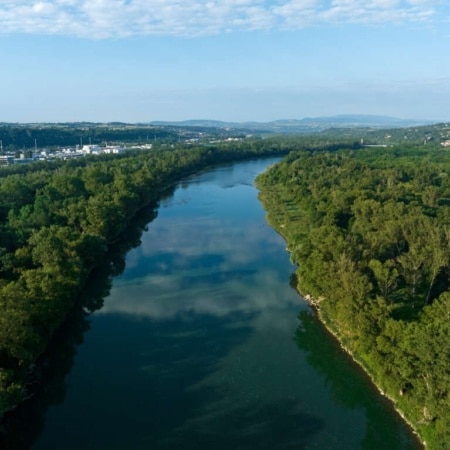
Since 2000, CNR and its partners have carried out one of the widest ranging river restoration programmes in the world. The aim is to give back to the river wetland areas favourable to biodiversity and the river’s dynamics.
These works permit restoring natural habitats, improving hydraulic functioning and strengthening the river’s capacity to cope with variations of discharge. In 25 years, 120 km pf river have been restored between the Swiss border and the Mediterranean.